By Paul Perry, featuring Darrel Upson
If you land in Buenos Aires with a degree, a backpack, and a prayer in 2026, you're walking the same streets Darrel Upson walked in 1997—except he had no smartphone, no WhatsApp expat groups, and no digital nomad visa. He built a career from scratch, surfed a country's economic collapse, and ended up managing millions for Wall Street families. His story isn't a get-rich-quick fantasy. It's a three-decade masterclass in what it actually takes to build wealth and a life worth living in Argentina—and what you're up against if you try to do it remotely today. Watch the full conversation here.
The 1997 Playbook: Networking When the Internet Was a Bar Stool
Darrel arrived as an English teacher, same as host Paul Perry. The career ladder wasn't LinkedIn—it was the Shamrock bar, a brick-and-mortar information hub where expats traded housing leads, job tips, and survival strategies. The real money, they discovered, wasn't in teaching kids. It was in corporate classes with Argentine directors, bankers, and lawyers.
"If you could teach them how to say 'Apple,' all of a sudden you were their best friend," Darrel recalls. That access opened doors to the private equity world. He landed a gig with a firm run by Dennis Taylor—yes, father of actress Anya Taylor-Joy—acquiring companies like Marta Harf cosmetics. This wasn't a formal internship. It was the art of being useful to the right people at the right time, a skill that still defines expat success in Buenos Aires, where personal trust often trumps résumés.

The Chicago Boys and a Master's Degree That Mattered
Darrel didn't just network—he studied. He earned a master's at SEMA (Sociedad de Estudios de la Economía Mundial y Argentina), a downtown economics school founded by Roque Fernández, Argentina's Economy Minister from 1995 to 1999. Fernández was a University of Chicago-trained economist, part of the "Chicago Boys" network that reshaped Latin American economic policy. Professors at SEMA included Milton Friedman protégés who had designed Argentina's 1980s hyperinflation stabilization plans.
That education gave Darrel a lens for understanding Argentina's perpetual economic cycles—a lens most expats never acquire. While newcomers panic at blue dollar swings, he saw structural patterns. While others flee inflation, he spotted the distortions that create opportunity. The lesson for 2026: the expats who thrive long-term aren't the ones with the biggest remote salaries. They're the ones who understand the rules of the game, even when the rules keep changing.
The Escape: April 2001, Weeks Before the Bottom Fell Out
Darrel married his Argentine wife, Molvina, in 1999—a wedding memorable partly because Paul got thrown (or fell) into the pool, fully dressed in black. By April 2001, the young family relocated to New York. Timing, in retrospect, was either brilliant or blessed: Argentina's full economic collapse hit in December 2001, with President de la Rúa resigning, the corralito freezing bank accounts, and the peso abandoning its dollar peg. They'd escaped by months.
This near-miss shapes everything about Darrel's current investment philosophy. He doesn't romanticize Argentine volatility. He respects it. And he's acutely aware that the line between "expat success story" and "casualty of macroeconomics" is thin.
The Wall Street Reality Check: What "Wealth Management" Actually Means
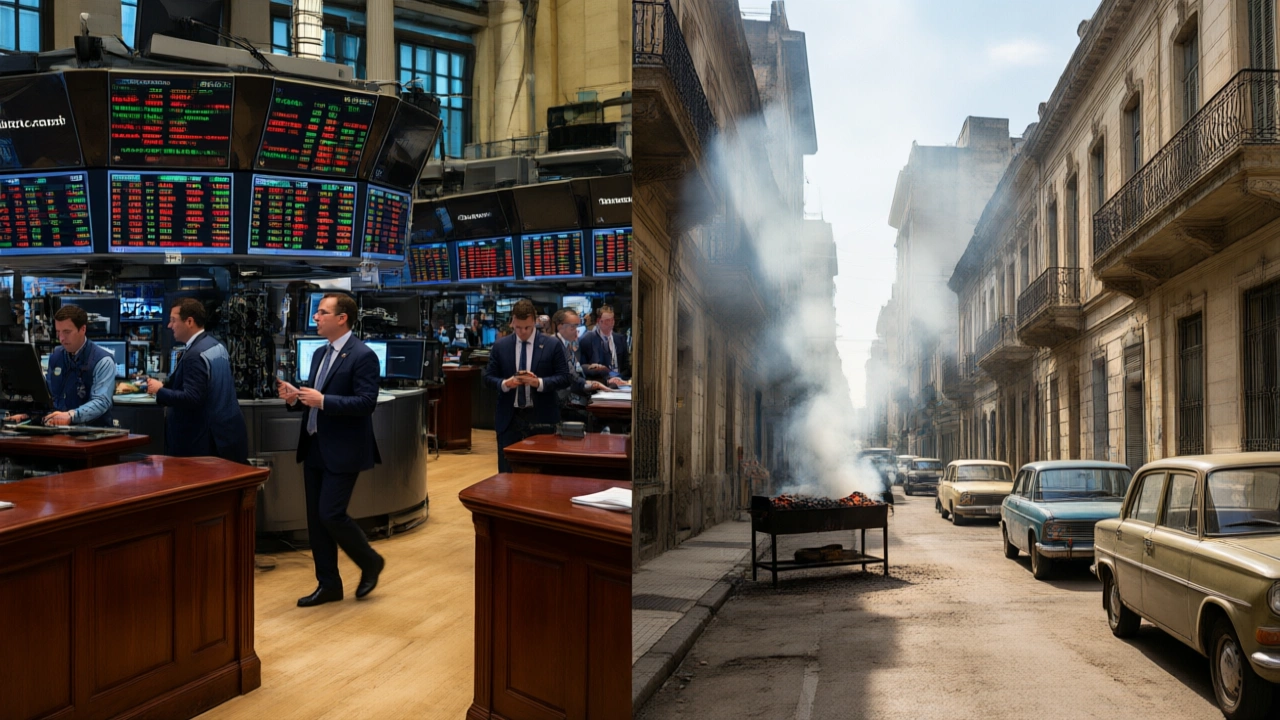
Today, Darrel works with affluent American families—$2 to $5 million in investable assets—focusing on tax-efficient wealth preservation, legacy planning, and intergenerational transfer. His professional advice for typical clients? Avoid emerging-market allocations. The volatility that makes Argentina personally interesting is exactly what his fiduciary duty warns against.
But personally? He sees "tons" of opportunity. He points to Argentina's lithium reserves—roughly 20% of the global total, concentrated in Salta, Jujuy, and Catamarca provinces—positioning the country as a critical supplier for EV and AI supply chains. He watches MercadoLibre (MELI), Argentina's most prominent publicly traded tech company, though its stock performance ties more to Latin American macro trends than Argentina alone. These are personal speculations, not client recommendations. The distinction matters: you can love Argentina's long-term potential without betting your retirement on it.
The Regulatory Trap No One Talks About
Here's the catch that kills the remote-work fantasy for financial professionals: Darrel can't do his job from Buenos Aires. Regulatory compliance—FATCA reporting, SEC/Finra oversight, cross-border advisory restrictions—requires face-to-face client contact and US-based operations. The US-Argentina tax treaty exists but has limitations, and capital controls (the "cepo") remain in modified form as of August 2026, restricting dollar access for most Argentines even as the Milei administration liberalizes some foreign investment channels.
This isn't just Darrel's problem. It's the hidden barrier for any licensed professional—lawyers, accountants, financial advisors—who dreams of working remotely from Palermo. Before you book the one-way ticket, check whether your professional license and compliance obligations even allow it. The digital nomad visa might let you enter, but it won't let you practice.
The Bicultural Family: Mate, Milanesas, and the 8-Hour Asado
Darrel and Molvina raised two children—Zachary and Molina—bilingual in Manhattan, maintaining Argentine cultural practices with deliberate effort. Annual family visits to Buenos Aires keep the kids connected to extended family and cultural identity. Darrel estimates six months of immersion would make them "off and running" in Spanish. The food rituals are non-negotiable: mate, milanesas, empanadas, asado. Darrel pays $10–11 USD per kilo for yerba mate in New York—implying the classic expat practice of suitcase smuggling, a legal gray area with agricultural import restrictions.
He describes the cultural contrast in terms of time itself: "New Yorkers are too fast… Argentinians just have that way of moving through a long afternoon with an asado—8 hours and you're like, '8 hours, what just happened?'" His wife's effortless reconnection during visits captures the emotional pull that keeps expat families returning despite economic chaos: "We come here and it's just different… We're talking till 1 in the morning and it's effortless." This isn't nostalgia. It's the lived texture that makes Argentina worth the administrative headache, the inflation math, and the blue-dollar arbitrage. If you're still weighing the pros and cons of daily life on the ground, our 2026 guide to navigating Buenos Aires reforms and daily life breaks down the current reality.
Soccer as an Economic Case Study
Darrel's Boca Juniors fandom traces to his uncle laying cable at La Bombonera stadium in the 1970s. His first match—in "la popular," the standing terrace, against Gimnasia—remains visceral: a 10-year-old kid climbing a light post, the stadium physically shaking from singing and dancing that "didn't stop until halftime." His family also had a Racing Club connection through his grandfather's sausage house (Casa Chisio) across from Racing's stadium.
But soccer here is also a business story. Argentine football clubs remain not-for-profit "mutual" or "civil association" structures as of 2026, preventing direct foreign equity investment or acquisition. Multiple legislative proposals to allow privatization have failed since 2018; the current government has expressed openness but no enacted reform exists as of mid-2026. Argentina's most valuable cultural export—football talent—remains structurally undercapitalized. That's not an accident. It's a window into Argentine political economy, where institutional inertia often trumps market logic.
The Money Reality: What You Need to Know Right Now
As of August 2026, the blue dollar was trading approximately 1,420–1,480 ARS/USD—a significant spread over the official rate. Annual inflation was running around 50% year-over-year, down from hyperinflationary peaks but still structurally high under the Milei administration's "zero deficit" fiscal policy. Capital controls persist in modified form. These numbers will be wrong by the time you read this. Always check a live tracker like dolarhoy.com or Ámbito Financiero before exchanging money, and verify current inflation data from the IMF or INDEC.
Darrel's broader point: Argentina's economic chaos creates genuine opportunity—lithium plays, undervalued assets, private deals—but only for those with local knowledge, patience, and the stomach for volatility. If you're looking for a smoother entry point, our 2026 digital nomad visa guide walks you through the legal framework for remote workers who aren't managing other people's money.
Safety: The Risks Are Different, Not Absent
Darrel notes significant improvement in Buenos Aires cleanliness and urban structure since 1997, while emphasizing that environmental awareness—street smarts—remains necessary. The comparative safety argument isn't "Buenos Aires is safe" but "the risks are different." No Second Amendment, very low rates of mass-casualty gun violence. But petty crime and pickpocketing are real. The expat who lets their guard down because they're not worried about getting shot is the expat who loses their phone on the Subte.
Practical Next Steps
- Network like it's 1997. The Shamrock is gone, but the principle stands: find the physical and digital spaces where Argentine professionals gather, and be genuinely useful.
- Learn the economic history. You don't need a SEMA master's, but you do need to understand why Argentina cycles through crises—and how to spot the distortions that create opportunity.
- Check your professional compliance. If you're licensed in law, finance, or medicine, verify whether you can legally practice from Argentina before you move.
- Build the bicultural infrastructure. Annual visits, food rituals, soccer loyalties—these transmit identity across decades and geography in ways that language apps alone cannot.
- Date every financial fact. Live by the blue dollar tracker. Never quote a peso price without an as-of date.
Frequently Asked Questions
Can I work remotely as a financial advisor from Buenos Aires?
Probably not. US financial advisors face FATCA reporting requirements, SEC/Finra compliance obligations, and cross-border advisory restrictions that generally require face-to-face client contact and US-based operations. The digital nomad visa may let you enter Argentina, but it doesn't override your professional licensing constraints. Consult your compliance department and relevant regulators before attempting remote practice.
What's the real investment opportunity in Argentina right now?
Argentina holds roughly 20% of global lithium reserves, positioning it as a critical supplier for EV and AI supply chains. MercadoLibre remains the most prominent publicly traded Argentine-connected company. However, these are long-term, high-volatility plays. Darrel's professional advice for typical clients is to avoid emerging-market allocations; his personal optimism is speculative, not fiduciary guidance.
How do you raise bilingual kids while living in the US?
Darrel and his wife maintained Argentine Spanish through annual family visits, deliberate food rituals (mate, milanesas, asado), and soccer loyalty transmission. He estimates six months of immersion in Buenos Aires would make his children functionally fluent. The key is consistency over decades, not intensity over months.
Why can't foreign investors buy Argentine soccer clubs?
Argentine football clubs are legally structured as not-for-profit "mutual" or "civil association" entities, preventing direct foreign equity investment. Multiple privatization proposals have failed since 2018, and no reform had been enacted as of mid-2026, despite the current government's rhetorical openness.
Is Buenos Aires safer than US cities?
The risk profile is different, not absent. Argentina has no Second Amendment and very low rates of mass-casualty gun violence, but petty crime, pickpocketing, and environmental awareness (street smarts) remain essential. Don't confuse the absence of one threat with the absence of all threats.
Disclaimer: This article is not immigration, legal, or financial advice. Verify current visa rules at migraciones.gob.ar, exchange rates at dolarhoy.com, and investment regulations with your licensed advisor. All peso prices and exchange rates are time-sensitive; confirm before acting.