If you live in Buenos Aires long enough, you start to realize the city is a palimpsest of rock history — and most expats walk right over it without noticing. The guy who lived down the hall in Flores? That was Luis Alberto Spinetta. The blues riff you hear drifting from a La Paternal bar? That's the ghost of Pappo, the Argentine guitarist B.B. King called one of the best he'd ever met. Chapete, a Chicano-Argentine filmmaker who spent a decade making a documentary about Pappo, sat down with me in August 2026 to unpack why Argentina's rock heritage matters — and what it actually looks like to build a creative life here instead of in LA or New York.
Who Was Pappo? Argentina's Blues Giant Most Expats Have Never Heard Of
Norberto "Pappo" Napolitano was a foundational Argentine blues and rock musician who grew up between the barrios of La Paternal and Flores. If you're an expat who's dipped into local music, you've probably heard his name — but the scale of his international recognition might surprise you. B.B. King publicly stated that Pappo was "one of the best musicians" he'd encountered across more than 80 countries, an endorsement that led to the two sharing a stage at Madison Square Garden. As of August 2026, that concert hit its 33rd anniversary.
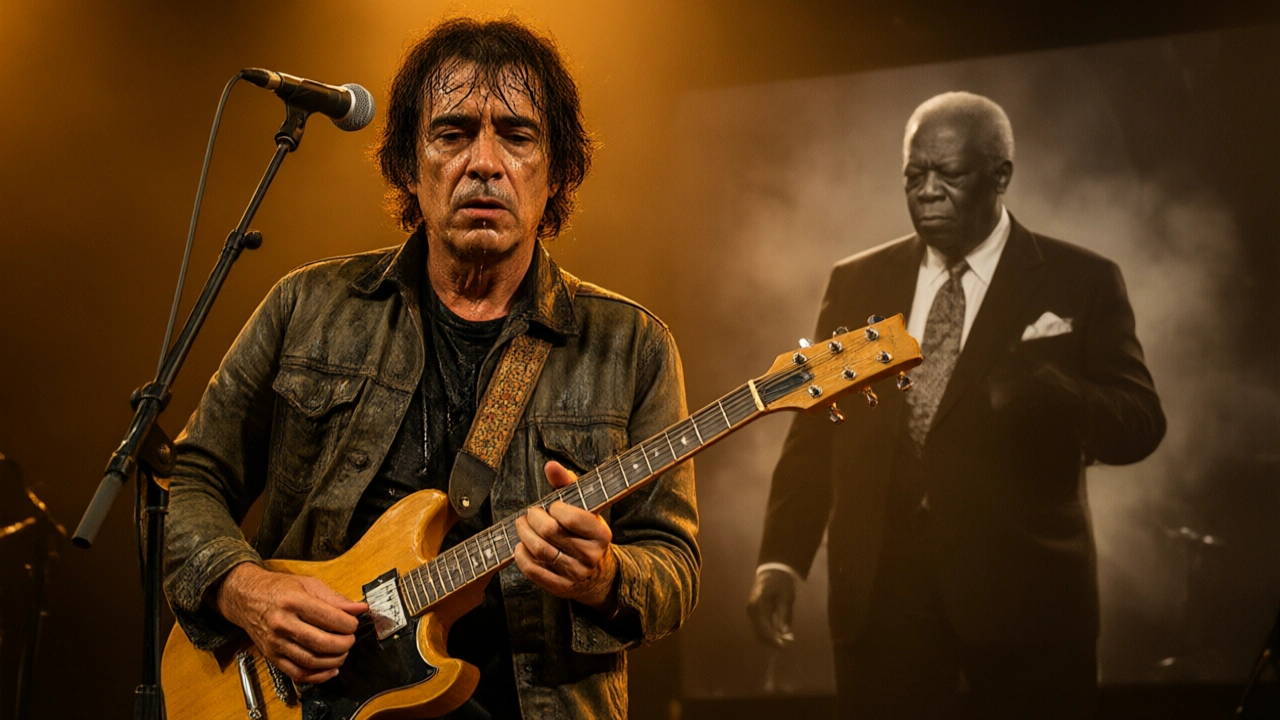
Chapete's documentary, Something Has Changed: A Quixotic Journey Through the Spanish Blues (also released under the Spanish title Pappo's Blues), took ten years to complete. The two-hour film traces not just Pappo's career but the entire lineage of blues sung in Spanish — a tradition that, as Chapete's research emphasizes, started in Villa Crespo in 1968 with the band Manal. Before Manal, blues was an English-language import. After Manal, it had an Argentine accent.
This isn't just music nerd trivia. For expats, understanding Pappo and Manal is a shortcut to grasping something essential about Argentine culture: the country doesn't just import global art forms, it metabolizes them and spits out something unmistakably local. The blues here has, as Chapete puts it, "a different color" — partly because of the African candombe tradition, where drums were permitted in ways they weren't under U.S. slavery. (Chapete's historical framing on this is interpretive; academic sources on candombe's Montevideo origins may not fully align with his Buenos Aires-centered narrative, but the core insight — that Argentine rhythm traditions shaped the local blues — holds.)
The Spinetta Connection: Living Next Door to a Legend Without Knowing It
One of the most disarmingly honest moments in our conversation came when Chapete talked about Luis Alberto Spinetta, the towering figure of Argentine rock who died in 2012. Chapete and Spinetta were neighbors in Flores. They were friends. And Chapete didn't really care about Spinetta's music while the man was alive.
"I didn't appreciate the musician he was," Chapete told me. "He was more my friend and my neighbor who just happened to play the guitar… I didn't start to really take any interest in his music until after he passed, which is a shame. I guess that's why he chose me as a friend — because I wasn't really interested in his music. I wasn't a fan."
There's something profoundly Buenos Aires about this. The city compresses fame and everyday life into the same block. Your neighbor is a global icon, but he's also just the guy who borrows sugar. For expats, this is both a gift and a warning: you might be living inside history and not realize it until it's gone.
According to Chapete, Spinetta and Pappo had a musical rivalry — local lore holds that Spinetta "stole" musicians Pappo had assembled for various bands. Whether this was genuine tension or the productive friction of two geniuses sharing a scene is debated; multiple Argentine music histories emphasize mutual respect between them. Chapete's framing reflects the anecdotal, neighborhood-level version of the story rather than academic consensus. Take it as the kind of tale you'd hear over a beer in Flores, not a footnote in a dissertation.
Why a Filmmaker Leaves LA for Buenos Aires
Chapete spent roughly a decade in the United States before making the reverse migration back to Buenos Aires. His reasons will sound familiar to anyone who's chosen this city over a more conventional creative hub.
"I got very bored of LA," he said. "It's a weird city where everything is on cars… it just gets very boring. Buenos Aires is a very nice city. Like everything happens here all the time."
But the decision wasn't purely aesthetic. Chapete studied film at CIEVIC (Centro de Investigación Experimental en Video y Cine), a now-closed Buenos Aires school founded by Aldo Paparella. CIEVIC's alumni and teachers included Santiago Loza, who won the Un Certain Regard prize at Cannes, and Eduardo Borthwick, a screenwriter on The Secret in Their Eyes. Chapete chose this path over U.S. film schools explicitly because of cost: he describes American film education as "super expensive" with "terrible debts." As of 2026, that calculus hasn't changed — and for expat creatives considering Buenos Aires, the lower financial burn rate is a legitimate career strategy, not just a lifestyle preference.
Then there's the AI factor. The 2023 Hollywood writers' and actors' strikes, with Fran Drescher leading SAG-AFTRA through negotiations over AI intellectual property rights, crystallized something Chapete already felt: the corporate direction of U.S. filmmaking was veering toward what he calls "horrible" AI-generated content, "like junk food" — a loss of artistic soul. He left the U.S. partly because of this. For expat filmmakers and artists in Buenos Aires, resisting AI-driven corporatization isn't a Luddite stance; it's an artistic identity, and one that Argentina's less industrialized creative economy makes possible.
The 10-Year Film: Making Art Without Funding in Buenos Aires
Chapete's Pappo documentary took a decade. He made it "in bits and bites," without institutional funding. "My films don't have fundings," he said. "I just do them in bits and bites… I really want to enjoy the ride while it's lasting. For me it's like an experience."
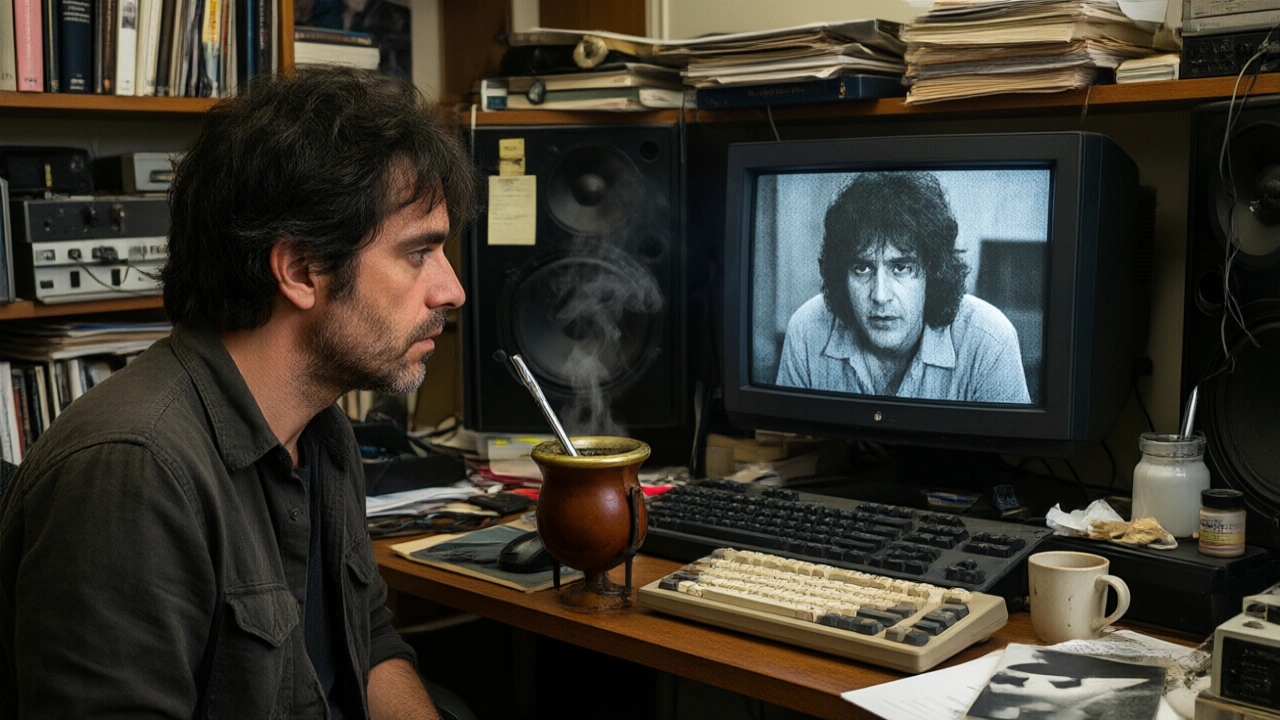
This is the lived reality of Buenos Aires' creative economy. It's not glamorous. It's slow. But the city's patience — its lower cost of living, its community of artists who aren't chasing Silicon Valley money — makes a ten-year project viable in ways it simply wouldn't be in New York or LA. For expats considering a creative move, this is the unsexy truth behind the romanticized "artist's life in Buenos Aires": it works because you can afford to be poor for a decade while you make something that matters.
Chapete's first film offers a parallel lesson in Buenos Aires' cultural texture. It was about the Kim Novak bar in Palermo, at the corner of Godoy Cruz and Güemes, which opened on December 30, 2004 — the day before the Cromañón nightclub fire that killed 194 people and permanently changed Argentine nightlife. The bar was run by a filmmaking and art direction duo named Bosco and Jojo. According to Chapete, its visitors over the years included Paris Hilton, Francis Ford Coppola, and the French singer Benjamin Biolay, who wrote a song called "Buenos Aires" referencing the bar. (These celebrity claims are vivid but unverified by independent sources; Biolay's song exists, but the direct Kim Novak reference needs confirmation.) The bar's opening date, juxtaposed with Cromañón, is a reminder of how Buenos Aires nightlife carries both creative energy and collective trauma — and how expat artists here inevitably absorb both.
B.B. King's Drummer, Argentine Tours, and the Living Blues Connection
As of August 2026, the Pappo legacy was having a tangible moment. Tony Coleman, B.B. King's drummer for over 30 years, toured Argentina, Uruguay, and Chile in late August, backed by the Argentine band The Idelfonigos (led by Victor Sanders, with guitarist Patches and Ali Shaker). The tour dates — August 26 through 28 — have now passed, but the fact of the tour underscores something important: Argentina's blues connections aren't just historical. They're alive, and they draw international musicians who understand the country's unique place in the genre's global story.
For expats, this is a practical tip: check current tour schedules for blues and rock shows. The circuit is real, and it's one of the most direct ways to plug into the cultural lineage Chapete's documentary explores.
What This Means for Expats: Practical Takeaways
- The reverse migration is rational. LA and New York are expensive, car-dependent, and increasingly shaped by corporate AI priorities. Buenos Aires offers a lower burn rate, walkable neighborhoods, and an artistic community that values process over product. If you're a filmmaker, writer, or musician, the math can work in your favor — not despite the lack of funding, but because of it.
- You're living in a rock heritage zone. La Paternal, Flores, Villa Crespo — these aren't just barrios with affordable rent. They're where Argentine blues and rock were born. Walk them with that awareness, and the city changes.
- Community matters more than credentials. Chapete's CIEVIC education, his decade-long documentary, his cross-cultural identity as a Chicano-Argentine — none of it followed a straight career path. What made the work possible was staying embedded in a place and a community that gave him time.
- Mate is the expat bridge. Chapete started drinking mate as a kid, but it became a conscious identity marker when he lived abroad: "I started drinking it more when I was living outside. I kind of just missed it." For expats, yerba mate is often the first cultural habit that stops feeling like tourism and starts feeling like home.
The Kim Novak Bar, Cromañón, and the Fragility of Buenos Aires Nightlife
It's worth sitting with the Kim Novak story for a moment. A bar opens in Palermo on December 30, 2004. The next day, Cromañón burns, and Argentine nightlife is never the same. The bar survives, becomes a magnet for filmmakers and musicians, and eventually inspires a documentary by a guy who'd go on to spend ten years making a film about Pappo.
This isn't just a quirky anecdote. It's a pattern. Buenos Aires' creative scenes are resilient, but they exist in the shadow of economic crises, political upheavals, and tragedies that reshape the city overnight. Expats who thrive here learn to hold both realities at once: the vitality and the precarity. Chapete's career — unfunded, slow, deeply local — is one model for how to do that.
FAQ: Argentine Rock, Pappo, and Expat Creative Life
Who was Pappo, and why does he matter for expats in Buenos Aires?
Pappo (Norberto Napolitano) was a foundational Argentine blues and rock guitarist who earned B.B. King's public endorsement as one of the best musicians King had met across 80+ countries. For expats, Pappo represents Argentina's underrecognized global musical influence — a counter-narrative to the idea that Argentine culture is isolated or purely local. His legacy is embedded in the barrios of La Paternal and Flores, neighborhoods where many expats live without knowing the rock history under their feet.
What was the first band to sing blues in Spanish?
Manal, formed in Villa Crespo, Buenos Aires, in 1968, is widely recognized as the first band to perform blues in Spanish. This was a pivotal moment in Argentine rock history, marking the genre's transition from an English-language import to a locally rooted art form. Chapete's documentary traces this lineage as essential context for understanding Pappo's later work.
Why would a filmmaker choose Buenos Aires over Los Angeles?
According to Chapete, who spent roughly a decade in the U.S. before returning, Buenos Aires offers lower living costs (avoiding the "terrible debts" of American film schools), a walkable urban culture, and an artistic community less dominated by corporate AI pressures. The 2023 Hollywood strikes crystallized these tensions for many creatives. Buenos Aires allows for unfunded, long-term projects — like Chapete's ten-year documentary — that would be financially unsustainable in LA or New York.
Did Luis Alberto Spinetta and Pappo have a rivalry?
According to Chapete, local lore holds that Spinetta "stole" musicians Pappo had assembled for various bands, creating a productive friction between the two. However, multiple Argentine music histories emphasize mutual respect rather than genuine conflict. Chapete's account reflects the anecdotal, neighborhood-level version of the story rather than academic consensus. It's best understood as the kind of tale you'd hear from someone who lived in Flores, not a definitive historical claim.
How can expats connect with Buenos Aires' rock and blues scene today?
Live music venues in barrios like Palermo, Villa Crespo, and San Telmo regularly feature blues and rock acts. International musicians with connections to Argentine blues history — like Tony Coleman, B.B. King's drummer for 30+ years — tour the country periodically. As of August 2026, Coleman completed a South American tour with Argentine backing band The Idelfonigos. Expats should check current schedules for similar events and explore the local circuit rather than relying solely on international headliners.
What does it actually cost to make a film in Buenos Aires without funding?
Chapete's experience suggests the primary cost is time, not money. His Pappo documentary took ten years, made "in bits and bites" without institutional backing. Buenos Aires' lower cost of living — relative to U.S. creative hubs — makes this feasible, but it requires patience, community support, and a willingness to work outside formal funding structures. This isn't a path to quick commercial success; it's a model for slow, community-embedded artmaking.
Perishable Facts and Live Sources
- Tony Coleman's August 2026 tour dates (August 26-28) have passed. For future blues and rock events in Buenos Aires, check local venue listings and musician social media — schedules change frequently and are not centrally tracked.
- Chapete's comparison of U.S. vs. Argentine film education costs reflects 2026 conditions. Exchange rates and tuition figures fluctuate; verify current costs with specific institutions before making decisions.
- SAG-AFTRA's AI agreements were updated in 2024 and continue to evolve. For current union guidelines affecting film and television work, consult the SAG-AFTRA website directly.
Next Steps for the Expat Creative
- Walk the rock barrios. Spend an afternoon in La Paternal, Flores, and Villa Crespo. Look for murals, old venues, record shops. The history is in the streets, not just in museums.
- Watch the documentary. Something Has Changed / Pappo's Blues is a two-hour immersion in Argentine blues history. Seek it out through Argentine film channels or independent screenings.
- Find your community before you find your funding. Chapete's career was built on relationships — with Spinetta as a neighbor, with the Kim Novak bar owners, with the musicians in The Idelfonigos. Buenos Aires rewards embeddedness. Go to shows, say yes to mate invitations, let the city's creative network form around you rather than trying to force it.
- Watch the full conversation here: Pappo Documentary - Chapete the Filmmaker on the Gringos in Buenos Aires Podcast
Disclaimer: This article is not immigration or legal advice. Visa rules for creative workers change; confirm current requirements at migraciones.gob.ar. Historical claims about Pappo, Spinetta, Manal, and candombe reflect Chapete's research and perspective; cross-reference with academic music histories for definitive statements. Celebrity visitor claims regarding the Kim Novak bar are unverified by independent sources. Tour dates and economic comparisons are time-sensitive as of August 2026.