By Paul Perry, featuring Alex
If you’re a Deadhead who’s moved to Buenos Aires—or you’re thinking about it and wondering whether your tribe exists down here—you already know the ache. You’ve left behind the lot scene, the bootleg swaps, the bar where the bartender knows your drink and the game is always on. You step off the plane at Ezeiza and wonder: where’s my church? The short answer is it doesn’t exist yet. But the longer answer—the one that actually matters—is that Argentina has its own version of everything you’re looking for, and understanding it is the key to feeling at home here.
This isn’t a guide to finding Dead cover bands in Palermo (there aren’t any). It’s a guide to understanding the counterculture DNA that runs through Argentine rock, why the expat bar scene feels hollow, and what it actually means to live between two cultural dimensions—straight from two people who’ve been doing it for decades.
The Grateful Dead Never Made It to Argentina—and the Void Is Real
The Grateful Dead never played Argentina. Not in 1973, not in 1990, not ever. Jerry Garcia died on August 9, 1995, and the band’s only South American stops were two shows in Brazil—Rio de Janeiro and São Paulo—in 1991. Dead & Company, the post-2015 iteration with John Mayer and the surviving core members, wrapped their final tour in 2023 without ever announcing a South American date. As of August 2026, there is no dedicated Grateful Dead bar, venue, or permanent gathering spot in Buenos Aires.
Alex, my guest on this episode, tried to build one. His Winterland concept—named after the legendary San Francisco ballroom—operated temporarily upstairs from Bukowski bar in Villa Gesell, a beach town about 350 kilometers from the capital. It’s closed now. When Alex says I’d love to put together a trippy cool bar and I respond with If anybody out there is a Deadhead, let us know, we’re not being cute. There’s genuine, unmet demand. The infrastructure simply doesn’t exist.
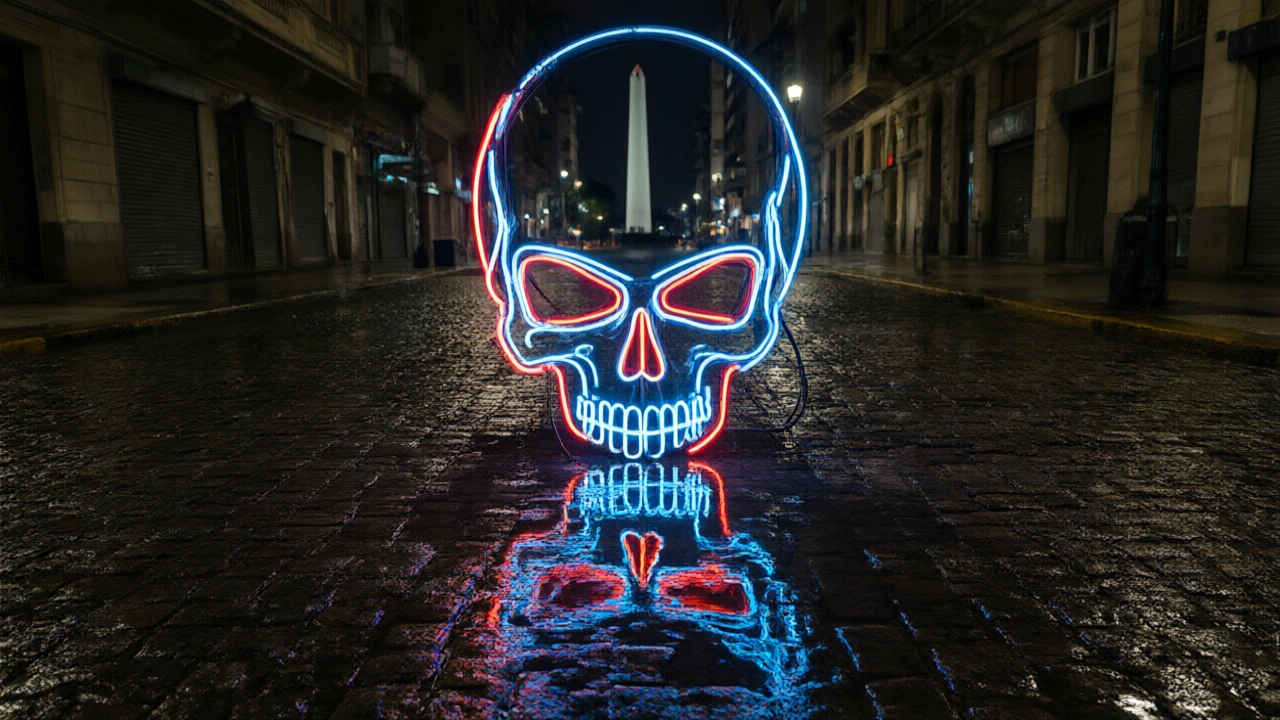
So what do you do? You look sideways. Argentina doesn’t have a Dead scene, but it has something that mirrors it so closely it’s almost eerie.
Los Redondos: Argentina’s Grateful Dead (No, Really)
If you want to understand Argentine counterculture, you need to understand Los Redonditos de Ricota—or simply Los Redondos, as everyone calls them. Formed in 1976 during Argentina’s brutal military dictatorship, they spent 25 years building the most devoted cult following in Latin American rock history before disbanding in 2001. Their fans, called ricoteros, don’t just attend shows. They pilgrimage. They camp outside stadiums for days. They call the concerts la misa—the mass.
Sound familiar?
Alex lived it. He was at the Mendoza concert and the two massive River Plate Stadium shows in 2000, where somewhere around 70,000 to 80,000 fans packed the stadium each night. It was a religious experience, he told me. The parallel between Deadheads going to church and ricoteros attending la misa isn’t a stretch—it’s the same phenomenon in a different language.
The band’s frontman, Indio Solari, died on June 21, 2026, at age 77. Alex immediately went downtown to Plaza de Mayo and the Obelisco to commune with my peers. He described the gathering as tainted a little bit with some politics here and there, but for the most part, very peaceful. That impulse—to physically gather with strangers who share your grief and your musical scripture—is exactly what Deadheads understand in their bones.
The historical parallel runs deeper than fandom. The Grateful Dead emerged under Nixon-era repression and the shadow of Vietnam. Los Redondos formed under a dictatorship that disappeared 30,000 people. Both bands created spaces where community was an act of resistance. The music wasn’t entertainment; it was survival. Albums like Oktubre (1986) and Un Baión para el Ojo Malo (1988) aren’t just Argentine rock masterpieces—they’re documents of a counterculture that refused to be crushed.
The Bar Culture That Doesn’t Exist (and Why It Matters)
Here’s something every American expat figures out eventually: Buenos Aires doesn’t do bar culture the way you’re used to. I told Alex on the podcast: There’s not a place where you have that bar culture where you just sit at the bar, you watch the screens, you interact if you want, you don’t interact if you want. No ten sports going at once. No bartender who knows your whole story. Alex, who spent years in the US, misses it too. The only person you want to talk to is the bartender… they knew everything about me.
This isn’t a complaint—it’s a structural difference. Argentine social life revolves around tables, not bars. You go out with your group, you sit down, you stay with your group. The casual, solo, bar-stool camaraderie that anchors American expat life in places like Mexico City or Lisbon doesn’t exist here in the same form. If you’re a newcomer, this can feel isolating. If you’re a Deadhead used to the lot scene—where strangers become family over a bootleg and a grilled cheese—it can feel like a void.
The geographic split doesn’t help. I live in San Isidro/Beccar, in the northern suburbs. It’s sleepy, upscale, full of founding families and marinas. Beautiful, but not where you’d stumble into a counterculture scene. Most newer expats cluster in Palermo, where the bars are cooler and the beer at the trendiest spots runs you about $7 to $9 USD equivalent at the blue dollar rate as of August 2026. That’s steep by Argentine standards—but compare it to $20–25 for a concert beer in LA, and suddenly the math shifts.
Living Between Two Dimensions: The Hybrid Expat Identity
Neither Alex nor I fit the standard expat narrative. I’m US-born, from South Philly, and I’ve been in Argentina for over 30 years. Alex was born in Argentina in 1979, emigrated with his family to the US in 1981, and returned in 1992 at age 13 or 14. He’s Argentine by birthright—Argentina recognizes jus soli citizenship, so his status was never in question—but he arrived speaking English, with American mannerisms, and got labeled yankee immediately.
People who knew me back then still say, ‘Oh, he’s a yankee,’ Alex told me. He got into fist fights as a teenager, standing his ground. That permanent outsider/insider tension never fully resolves. It’s the third-culture experience most expat content ignores: you’re not fully from here, not fully from there, and you’re building identity in the gap.
We both grew up with parents who deliberately suppressed Spanish at home. My family in South Philly pretended to speak Italian to avoid Hispanic stigma. Alex’s parents used Spanish only for discipline—throwing the chancla, he laughed. These are immigrant-parent calculations about assimilation that shape second-generation identity in ways you don’t unpack until decades later.
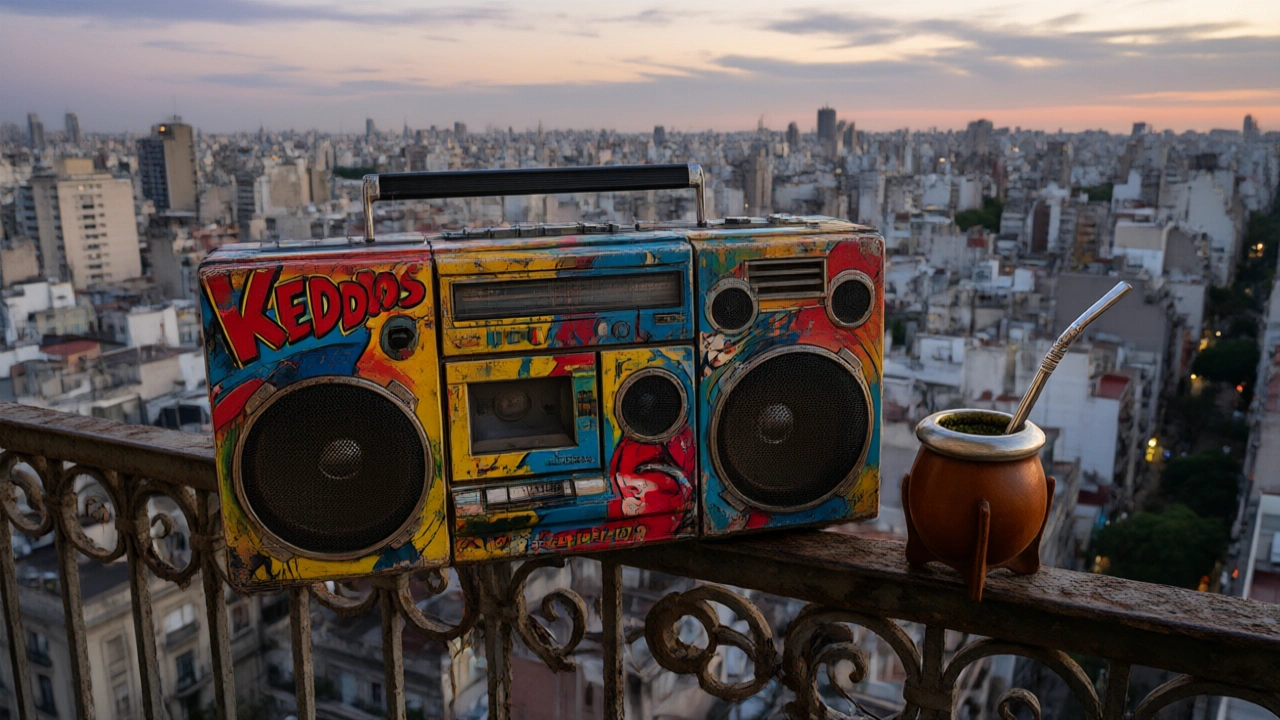
Then there’s mate. Alex’s first experience was with gauchos: piping hot boiling water coming out of a metal straw which would just burn my mouth and it was super bitter and it was horrible. Mine was… different. I thought my Paraguayan grandmother’s mate was marijuana. I smoked it. Two completely different origin stories, both converging decades later in Buenos Aires over the same shared ritual. That’s the texture of hybrid life—you don’t just learn a culture, you collide with it.
What Quality of Life Actually Means When You Stop Counting Dollars
Alex made a distinction on the podcast that I’ve never heard anyone articulate this cleanly: there are things money can buy and things ingrained in your soul. The US wins the first category—stuff, convenience, infrastructure. Argentina wins the second. Human connection here is slower to build but deeper once it’s there. Relationships aren’t transactional in the way they can feel in the States.
This reframes the tired cheap cost of living expat trope. Yes, you can still eat well for less here—even with the blue dollar hovering around 1,420–1,480 ARS/USD as of August 23, 2026, and annual inflation still exceeding 50% despite the Milei government’s stabilization efforts. But if you’re moving here just because it’s cheap, you’ll leave when the math shifts. The people who stay—the ones who build lives across decades—stay for the things money can’t buy.
Alex remembers arriving in 1992, during the convertibility era when the peso was pegged 1:1 to the dollar. It was almost like being in the States, he said. That window closed catastrophically in 2001, and Argentina has lurched through crises ever since. Understanding that history isn’t academic—it explains why the culture here values resilience and relationships over predictability.
The Gorge, the Tiger, and the Dose of the Dead
I asked Alex about his first Dead & Company show. He told me about the Gorge in Washington state, 2016. His description is worth quoting in full: It was as if some huge intergalactic tiger had just ripped through the earth. He called the band people who play really well that are magicians—not musicians. That’s the dose of the Dead in the episode title. It’s not about the drugs. It’s about the moment when music stops being sound and becomes something that rearranges you.
That experience is universal, and it’s why the absence of a Deadhead infrastructure in Buenos Aires stings. But it’s also why the ricotero phenomenon matters. If you’re looking for that feeling in Argentina, you won’t find it at a cover band night in Palermo. You’ll find it in the archives of Los Redondos, in the crowds that gathered for Indio in June, in the way Argentine rock fans treat music as something closer to religion than entertainment.
Practical Next Steps for the Counterculture-Minded Expat
If this resonates, here’s what you actually do:
- Start with Los Redondos. Oktubre (1986) and Un Baión para el Ojo Malo (1988) are the entry points. Listen to them the way you’d listen to American Beauty or Live/Dead—as documents of a specific counterculture moment.
- Watch the 2000 River Plate footage. It’s on YouTube. The scale and devotion will look familiar.
- Accept that you’ll be the one building the scene. There’s no Dead bar. There’s no lot. If you want it, you’re going to have to start it—or at least find the other three Deadheads in your barrio and host a listening night.
- Learn to love the table, not the bar. Argentine social life is group-oriented. Lean into it. The solo bar-stool camaraderie you miss isn’t coming back, but the friendships you build around shared meals and mate circles run deeper.
- Check your exchange rate before you go out. That $7–9 Palermo beer is at the blue rate. Verify live at dolarhoy.com or Ámbito Financiero before you budget your night.
FAQ
Did the Grateful Dead ever play in Argentina?
No. The Grateful Dead’s only South American shows were in Rio de Janeiro and São Paulo, Brazil, in 1991. Jerry Garcia died in 1995, and the band never performed in Argentina during their active years. Dead & Company also never announced South American dates before concluding their final tour in 2023.
Who are Los Redondos, and why do people compare them to the Grateful Dead?
Los Redonditos de Ricota (commonly called Los Redondos) were an Argentine rock band active from 1976 to 2001. Their fanbase, known as ricoteros, exhibits the same pilgrimage behavior, communal identity, and quasi-religious devotion to live shows—called la misa (the mass)—that characterizes Deadhead culture. Both bands also emerged under repressive political conditions, making their music a form of communal resistance.
Is there a Grateful Dead bar or venue in Buenos Aires?
As of August 2026, no. A temporary Winterland concept operated in Villa Gesell but has since closed. There is no permanent Deadhead-oriented bar, venue, or regular gathering in Buenos Aires. The podcast hosts have explicitly invited Deadheads in the city to reach out, indicating unmet demand.
What’s the biggest cultural adjustment for American expats in Buenos Aires?
The absence of casual, solo bar culture is frequently cited. Argentine social life is structured around tables and groups—you go out with your people and stay with your people. The American-style bar where strangers interact freely at the counter is rare. This can feel isolating for newcomers accustomed to that form of casual connection.
How much does a beer cost in Buenos Aires in 2026?
At trendier bars in neighborhoods like Palermo, expect to pay the equivalent of $7–9 USD at the blue dollar rate (approximately 1,420–1,480 ARS/USD as of August 23, 2026). Prices fluctuate with the exchange rate; verify current rates at dolarhoy.com before making spending decisions.
What does third culture mean in the expat context?
It describes individuals who don’t fully belong to their country of origin or their country of residence—they’ve built identity in the space between. Both podcast participants exemplify this: Paul is US-born but has lived in Argentina for over 30 years; Alex is Argentine-born but US-raised and permanently marked as yankee in Argentina. This hybrid identity is common among long-term expats but rarely discussed in standard relocation content.
Disclaimer: This article reflects personal experiences and cultural observations. It is not immigration or legal advice—confirm current visa rules at migraciones.gob.ar. Exchange rates and prices change rapidly; verify before making financial decisions. Historical claims about band tours and attendance are based on available records; some details may vary by source.
Watch the full conversation here: Gringos in Buenos Aires Podcast — A dose of the Dead and life in another dimension