By Paul Perry, featuring Daniel Lerner
If you're an expat or digital nomad wondering whether Argentina's economic transformation under Javier Milei is real enough to bet your career or savings on, Daniel Lerner has a counterintuitive answer: yes, but your grandchildren will thank you, not you. As Managing Director and Head of LatAm Private Credit at Adcap Grupo Financiero, Lerner is launching Argentina's first dedicated private credit platform right now — his second tour in a country he first worked in decades ago. In a sprawling conversation on The Gringos in Buenos Aires Podcast, he laid out where the money is flowing, why daily life still feels chaotic, and what "going with the flow" actually requires. Watch the full conversation here.
Why a 35-Year Emerging Markets Veteran Is Betting on Argentina Now
Lerner has deployed over $500 million in Argentine corporate financing across a career that included Bear Stearns, Lehman Brothers, and Smith Barney. He's not a tourist. His return, heading private credit at Adcap, is a signal: Argentina's credit market is so underdeveloped that even modest growth creates massive opportunity. Private sector credit stands at just 13–14% of GDP as of March 2026 — nearly double from two years ago, but still a fraction of the 40–50% typical across Latin America. "We're coming off a base of basically zero," Lerner said. For expats, this isn't just a financier's abstraction. When companies can borrow, they hire. They expand offices. They need accountants, lawyers, software developers, and service providers. The credit drought has starved the real economy; its return, however gradual, will feed it.
But Lerner is explicit about the timeline. "Our generation's not going to see it. Probably the next generation isn't going to see it," he said of Argentina reaching anything resembling a normal credit market. If you're planning a two-to-five-year stint, calibrate accordingly. You're not riding a rocket; you're laying track.

The Resource Wealth Beneath the Chaos
Argentina's macroeconomic story is a paradox so extreme it almost reads as satire: a country with the world's second-largest lithium deposits, the Vaca Muerta shale formation turning it into a net energy exporter, and one of the planet's most fertile agricultural belts, yet a poverty rate hovering around 48–51%. Lerner calls this "crowding out" — decades of government borrowing that starved the private sector of capital, leaving resource wealth untapped or underdeveloped. The Milei government's orthodox turn — fiscal balance, no more money printing — is designed to reverse that. Inflation has come down, but as Lerner notes, employment growth remains the critical, unsolved variable. Global AI disruption compounds the problem: automation threatens to eliminate jobs just as Argentina needs to create them. "It's a double whammy," he said.
For expats considering Argentina as a place to build something, the sectors Lerner flags are the ones to watch: agriculture, energy (Vaca Muerta), and mining — gold, copper, uranium, lithium. These are hard-currency export engines. If you have skills in project finance, geology, logistics, or corporate law, the demand is real and growing. But verify current export status through the Ministry of Energy before making any move; the energy transition from importer to exporter is still unfolding.
"Go with the Flow" — What It Actually Means
Lerner's best advice for surviving Argentina isn't financial; it's psychological. "You just have to go with the flow," he said repeatedly, and then illustrated it with stories that would break a less adaptable person.
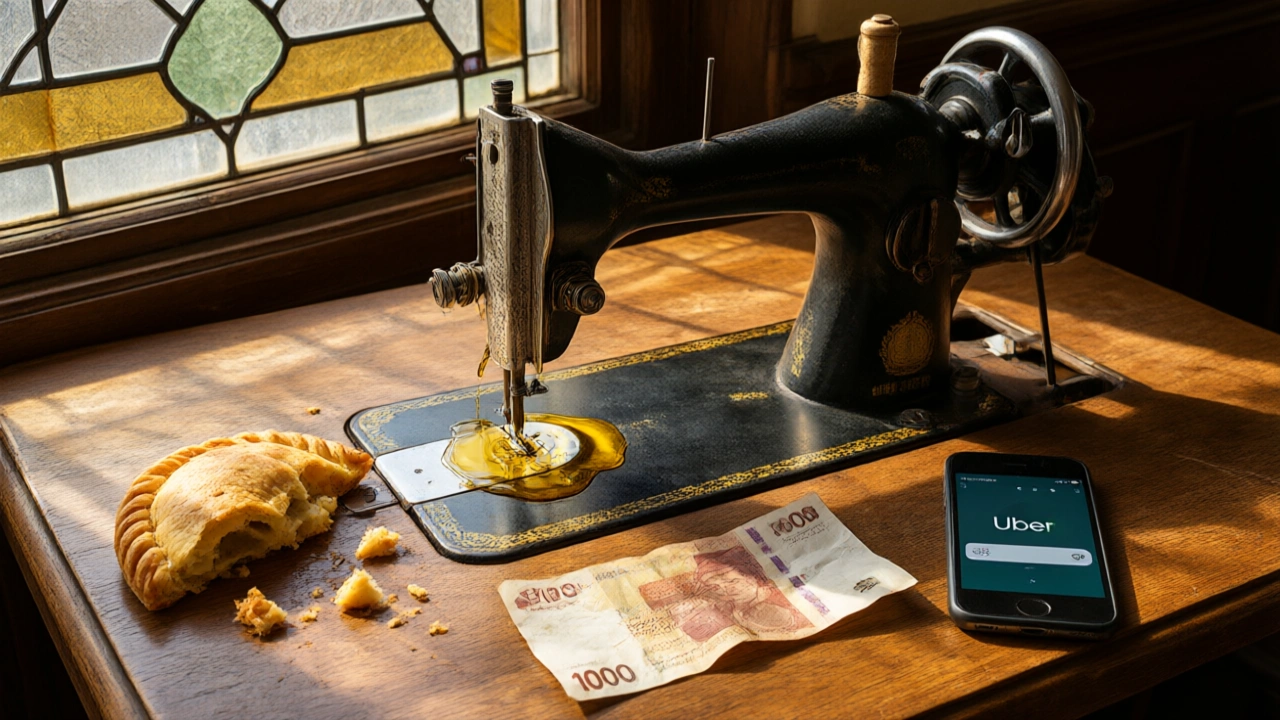
He told us about working late at his office, only to find the building locked, dark, and his key card deactivated. "I'm used to buildings being open 24/7, weekends… I had to work at 3:00 a.m." He had to call for rescue. Another time, an Uber driver started the trip without picking him up; the replacement car had a broken window, and the driver explained, with perfect Argentine logic, that he couldn't turn on the AC if a window was open. Lerner's wife paid 175,000 pesos (roughly $175 USD at parallel rates as of March 2026 — check dolarhoy.com for current rates) to fix a sewing machine oil leak, only to be charged an additional 15,000 pesos for the oil itself. She refused. "You have to stand up for your right," Lerner said. "The customer is not right here."
This is the texture of expat life that macroeconomic optimism papers over. Argentina will waste your time. Systems will fail. The work culture — weekends are sacred, colleagues won't answer emails — will infuriate anyone from a 24/7 business culture. Lerner sent presentations all weekend to his Argentine team. "Do I hear anything from them at all during the weekend? No. Because weekends are for family time." If you can't adapt to that, the investment thesis doesn't matter. You'll burn out.
For a deeper look at the daily realities of navigating Argentine bureaucracy and culture, read our guide on living in Buenos Aires in 2026.
The Tax Burden and Why Everything Costs More
Lerner didn't sugarcoat the cost structure. Argentina has "more taxes than any other country in the world," he claimed — a 21% VAT plus provincial gross receipts taxes (impuesto a los ingresos brutos) that effectively tax revenue before net income, creating brutal double taxation. The result is visible on the street: a Zara shirt costs significantly more in Buenos Aires than in New York, once you factor in import duties, transport, and logistics. Lerner quoted Economy Minister Luis Caputo: "No one buys clothes in Argentina… It's too expensive."
For expats earning in foreign currency, the blue dollar exchange rate cushions some of this, but not all. If you're thinking of starting a business here, the tax architecture is hostile. Factor it into your model from day one, and hire a local contador who understands provincial variations. This is not a jurisdiction for DIY incorporation.
Art, Empanadas, and Pickleball: The Human Side
What makes this conversation credible is that Lerner isn't just a suit. He tried to become a painter, bought all the supplies, and discovered it was "hard as hell." Now he visits galleries with collector friends and seeks out Argentine art. He's obsessed with the empanadas from a local chef's second restaurant — "the best empanadas in Buenos Aires," including a new trout variety — and is planning a New York export business around them. He plays pickleball with an expat group organized by a guy named Christian from Thailand, though he's currently sidelined with an injury. These aren't color pieces; they're evidence of a life being lived, not just a portfolio being managed. For expats, this is the template: find your empanada guy, your pickup game, your gallery circuit. The macro will drive you insane; the micro will save you.
Lerner's Spanish, which he calls macanudo — a 1940s-vintage Argentine Spanish inherited from his parents — marks him as a hybrid. Not fully local, not fully gringo. That liminal space is where most long-term expats end up. It's not a bug; it's the condition.
What This Means for Your Decision
So should you consider Argentina for business, investment, or career opportunities? The answer from this conversation is a qualified yes, with a stopwatch set to decades, not years. The resource base is real. The policy direction under Milei is orthodox and, as of mid-2026, markets are pricing in another four years of his administration. But the structural obstacles — tax, bureaucracy, cultural friction, poverty — aren't going anywhere fast. Lerner's "go with the flow" isn't a platitude; it's the price of admission.
For a broader look at Argentina's economic trajectory, see our June 2026 guide to the economy under Milei.
If you're an investor, private credit is the frontier Lerner is staking out, and the numbers — a credit market at 13–14% of GDP in a resource-rich G20 economy — speak for themselves. If you're a professional, the sectors are energy, mining, and agriculture. If you're a digital nomad or remote worker, the opportunity is less direct: you're betting on the ecosystem that credit growth will eventually create. In all cases, verify current data. Check INDEC for inflation and poverty figures, BCRA for credit ratios, and Ámbito Financiero for exchange rates before making any commitment.
Disclaimer: This article is not investment, financial, or immigration advice. Daniel Lerner's assessments reflect his professional perspective as of March 2026; market conditions and government policy may have shifted. Exchange rates, inflation figures, and credit market data change rapidly. Historical performance in emerging markets does not guarantee future results. Argentina's political and economic volatility requires heightened due diligence. Confirm current regulations with BCRA, CNV, or qualified Argentine legal counsel.
Frequently Asked Questions
Is Argentina's private credit market really growing, and why does it matter for expats?
Yes, but from a basement-level base. Private sector credit reached 13–14% of GDP as of March 2026, nearly double from two years prior, but still far below the 40–50% regional norm. For expats, this matters because credit growth enables companies to expand, hire, and invest — creating demand for professionals in law, accounting, tech, and services. The catch: Lerner himself says meaningful normalization is a multi-generational project, not a quick win. Don't expect a jobs bonanza in 2027. This is a long-duration bet.
What are the biggest cultural shocks for a foreign professional working in Argentina?
Lerner's experience is instructive: the work-life boundary is rigid. Weekends are family time, period. Emails go unanswered. Buildings may literally lock you in if you work late, because the assumption is that no one does. Customer service norms are inverted — "the customer is not right," Lerner said, and you'll need to advocate for yourself forcefully. The upside is a richer social fabric: pickleball groups, gallery openings, and empanada obsessions fill the space that workaholism occupies elsewhere. Adapt or leave; there's no third option.
Which sectors in Argentina offer real investment or career opportunities right now?
Lerner identified agriculture (Argentina's historical hard-currency export base), Vaca Muerta shale energy (transitioning the country to net exporter status), and mining — lithium, gold, copper, uranium — as the pillars. These are capital-intensive, export-oriented industries where private credit and foreign investment are actively flowing. If you have skills in project finance, geology, energy logistics, or corporate law, these sectors are hiring. Verify Vaca Muerta's current export status through the Ministry of Energy, as the transition is ongoing.
How does Argentina's tax system affect expats and business owners?
It's punitive. A 21% VAT plus provincial gross receipts taxes create effective double taxation on revenue and then net income. Imported goods, including clothing, are significantly more expensive than in New York due to duties and logistics — Lerner cited Minister Caputo's own admission that "no one buys clothes in Argentina." Expats earning in foreign currency via the blue dollar get some insulation, but anyone starting a local business must build tax costs into their model from day one and hire a local accountant familiar with provincial variations. This is not a low-tax jurisdiction, and simplification is not on the immediate horizon.
What does "go with the flow" actually mean for daily expat life in Buenos Aires?
It means accepting that systems will fail unpredictably: your Uber driver might start the trip without you, your office building might lock you in after hours, and a repair shop might try to charge you twice for the same job. It means not expecting weekend email responses from Argentine colleagues, and not letting these frictions accumulate into resentment. Lerner's approach is to assert your rights when necessary — his wife refused the bogus oil charge — but to otherwise release the expectation that things will work like they do in New York or London. The alternative is chronic frustration. The expats who last are the ones who find the absurdity amusing, not enraging.